Unleash Audacious Style with Tucan Bold
There is a specific kind of energy that a project demands when it refuses to blend into the background. You can feel it when you are designing a logo for a new streetwear brand, laying out a menu for a retro-themed diner, or creating a social media campaign that needs to stop the scroll immediately. In these moments, the subtle, safe, and "professional" fonts in your library just won't cut it. You need a typeface with a heartbeat, something that carries the weight of history while screaming modern relevance. This is where the Tucan Bold Retro Typeface enters the conversation, offering not just letters on a page, but a distinct personality that transforms standard text into a visual statement.
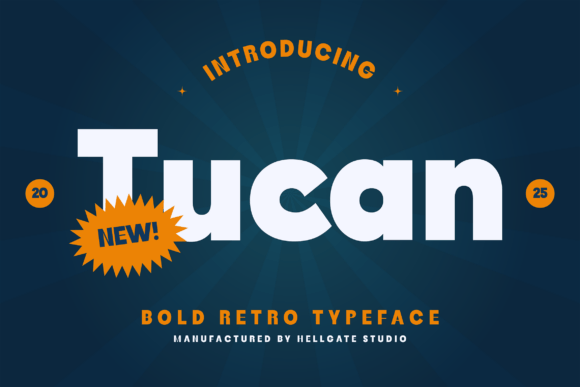
Immerse yourself in the boldness and power of the Tucan Bold Retro Typeface. This masterfully crafted font reveals an audacious attitude, perfect for drafting a modern theme with a touch of vintage charm. Its bold structure and robust nature lend a strong appeal, effortlessly enhancing your text. High on versatility, Tucan allows easy text and color editing, providing a seamless design experience. With impressive, high-quality rendering, what you see is truly what you get. Experience the joys of adding an aesthetic edge to your work with Tucan Bold Retro Typeface. But beyond the initial aesthetic punch, what does this font actually do for a designer, a business owner, or a creator trying to build a brand? Let’s break down how this premium font functions as a tool for visual communication and why its specific style might be the missing piece in your design toolkit.
The Anatomy of Audacity: Understanding the Tucan Style
To appreciate what Tucan Bold brings to the table, we have to look at its visual DNA. This isn't just another serif font or a generic sans serif font; it sits in a fascinating space that borrows from the best of mid-century typography while maintaining the clean edges required for web design and digital screens. The defining characteristic of Tucan is its high-contrast structure. You will notice the thick strokes are heavy and grounded, while the thin strokes provide a delicate elegance that prevents the text from looking like a blocky mess.
This "retro" quality is intentional. It evokes a sense of nostalgia—think vintage travel posters, classic cinema titles, or old-school signage—but it does so without looking dated. The curves are often soft and welcoming, counteracting the aggressive weight of the bold display style. For a brand identity, this is crucial. If you are launching a brand that wants to feel established and trustworthy but also creative and fun, Tucan bridges that gap. It tells the viewer, "We know the rules, but we are here to break them with style." It is a creative font that commands attention without shouting, making it ideal for headers, pull quotes, and logo wordmarks where every letter needs to perform.
From Screen to Shelf: Practical Applications for Modern Creators
A font is only as good as its application. While Tucan Bold looks fantastic in a specimen sheet, its true value lies in how it performs in the wild. Because of its high-quality rendering and robust nature, it is incredibly versatile across different mediums.
For those involved in packaging design, Tucan is a game-changer. Imagine a coffee bag, a craft beer label, or a line of artisanal hot sauces. These products rely on shelf appeal. The bold nature of Tucan ensures the product name is legible from a distance, while the retro serif details give the product an artisanal, hand-crafted feel. It suggests quality and heritage before the customer even picks up the product.
When it comes to logo design, versatility is king. You need a logomark that works equally well on a massive billboard and a tiny favicon on a browser tab. Tucan’s distinct silhouette maintains its integrity at various scales. It pairs beautifully with minimal imagery, allowing the typography to do the heavy lifting. If you are a small business owner looking for a commercial font that sets you apart from the corporate giants using Helvetica or Arial, Tucan offers that distinct visual hook.
Furthermore, in the realm of editorial design and blogging, headers need to grab the reader's eye instantly. Using Tucan Bold for your H1 and H2 tags can instantly elevate the look of a standard WordPress theme, giving it a magazine-quality feel. It is equally effective for social media graphics; in a feed full of generic text, the unique curves and weight of Tucan can stop a user mid-scroll, increasing engagement and click-through rates.
Streamlining Your Workflow: Editing and Versatility
One of the most frustrating aspects of working with display fonts is rigidity. Sometimes, a font looks great in black and white but falls apart when you try to apply gradients, textures, or specific brand colors. Tucan Bold was designed with the modern workflow in mind. It offers a seamless design experience, allowing for easy text and color editing. This means you aren't fighting the font to make it match your brand palette; it adapts to you.
This flexibility is vital for creating marketing assets. Whether you are designing an email header, a digital ad, or a printable flyer, you need consistency. A font that renders poorly at certain sizes or breaks when outlined in vector software is a liability. Tucan’s robust architecture ensures that "what you see is what you get" (WYSIWYG). The vector paths are clean, making it easy to manipulate for merchandise like t-shirts or tote bags where complex outlines can cause production issues.
Consider the needs of a content creator or digital product designer. You might be creating a PDF guide, a course workbook, or a set of Instagram templates to sell. You need a font that is licensed for commercial use and looks professional. Tucan fits this role perfectly. It allows you to create high-value assets that look premium, justifying a higher price point for your digital goods. The ability to easily edit colors means you can create multiple variations of the same template quickly, catering to different client needs without spending hours adjusting letterforms.
The Art of Pairing: Building a Complete Typographic System
While Tucan Bold is a showstopper, no font is an island. A key part of modern typography is the font pairing—choosing complementary fonts that work together to create hierarchy and readability. Tucan is a bold, expressive typeface, which means it works best for headers and display text. For body copy, you need something that steps back and lets Tucan shine while remaining highly readable.
A classic pairing strategy for a retro-bold serif like Tucan is to pair it with a clean, geometric sans serif font. The simplicity of a sans serif body text creates a beautiful contrast with the complex, high-contrast strokes of Tucan. This ensures that your pages don't look cluttered. If you are going for a fully vintage aesthetic, you might pair it with a clean script font for accents or a simple handwritten font for annotations, but be careful not to overdo the "theme." The goal is to use Tucan as the anchor of your design.
When testing your pairings, always check for "x-height" compatibility. You want the lowercase letters of your body font to feel harmonious next to the capital letters of Tucan. Another practical tip is to check the weight balance. Since Tucan is "Bold," ensure your body text isn't too thin, or the contrast will be jarring. A medium or regular weight usually pairs best. By treating Tucan as the lead vocalist and your secondary font as the rhythm section, you create a symphony of visual communication that guides the reader's eye exactly where you want it to go.
Readability and Hierarchy: The Professional Presentation
It is a common misconception that display fonts or retro typefaces sacrifice readability for style. While it is true that you wouldn't write a 5,000-word article entirely in Tucan Bold, for its intended purpose, legibility is paramount. The designers of Tucan have ensured that the character recognition is high, even with its stylistic flair. The open counters (the enclosed spaces in letters like 'e', 'a', or 'o') are generous, preventing the letters from filling in when used at smaller sizes or on lower-resolution screens.
Using Tucan effectively requires an understanding of hierarchy. It provides a strong visual anchor. In a layout, you can use the weight of Tucan to draw the eye to the most important information first—usually the headline or the value proposition. This is essential for poster design and invitation design, where the time a viewer spends looking at the material might only be a few seconds. You need them to grasp the "Who, What, and Where" instantly.
For brand recognition, consistency is more important than novelty. Once you choose Tucan as part of your identity system, use it consistently across all touchpoints. The robust nature of the font ensures that whether it is embossed on a business card or printed on a vinyl banner, the visual identity remains solid. This professional presentation builds trust with your audience. It signals that you pay attention to details and that you value the quality of your visual communication.
Choosing the Right Tool for the Job
Ultimately, selecting a typeface is a strategic decision. It’s not just about what looks "cool" on your screen right now; it’s about what serves the project's goals for years to come. Tucan Bold is a specific tool for specific jobs. It is the right choice when you need to inject personality, warmth, and authority into your designs. It is perfect for brands that want to feel approachable yet established, creative yet reliable.
Before finalizing your choice, consider the longevity of the trend. While retro styles come and go, the specific blend of mid-century charm and modern clean lines that Tucan offers is timeless. It doesn't rely on gimmicks. It relies on solid typographic principles executed with a bold flair. Whether you are a designer looking for a new asset, a marketer trying to refresh a campaign, or an entrepreneur launching a new venture, Tucan Bold offers a unique combination of aesthetic appeal and practical functionality. It proves that you don't have to choose between a font that looks good and a font that works hard—you can have both.