Why the It's Ok Font Feels Like a Friendly Hug for Your Designs
There are fonts that command attention with sharp edges and heavy weight, and then there are typefaces that simply make you smile. The It’s Ok font belongs firmly in the latter category. If you have ever found yourself scrolling through a library of premium fonts looking for something that feels approachable, modern, and undeniably cheerful, this display font is likely to stop your scroll. It doesn't scream for attention with aggressive angles; instead, it invites the viewer in with soft, rounded geometry and a sense of whimsy that is surprisingly versatile. In the world of modern typography, finding a balance between professional utility and playful personality can be difficult, but this specific typeface manages to bridge that gap effectively.
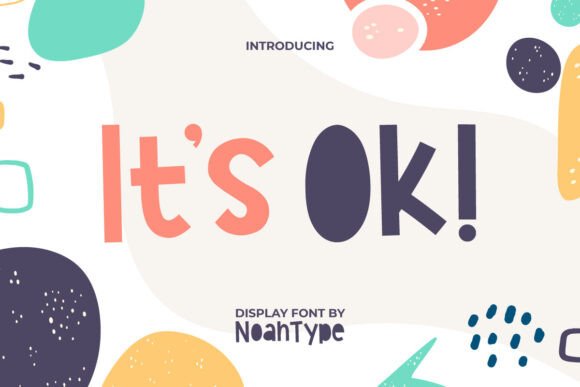
What makes It’s Ok visually distinct is its construction. The letters are designed with a uniform softness—there are no harsh thicks or thins that you might find in a traditional serif font. Instead, the strokes maintain a consistent, friendly weight that feels stable and grounded. The defining characteristic, however, is the fill. Each rounded character is solid, creating a "bubble" effect that feels tactile and energetic. This makes it a fantastic creative font for projects that need to convey warmth, safety, or a childlike sense of wonder without looking juvenile. It is a display font by nature, meaning it shines brightest in headlines, logos, and short bursts of text where its personality can fully expand without overwhelming the reader.
Practical Applications: From Brand Identity to Packaging Design
For small business owners and creative entrepreneurs, the font you choose is often the first handshake with a potential customer. The It’s Ok font excels in environments where trust and approachability are key. Imagine a local bakery, a children’s educational app, or a sustainable lifestyle brand. Using a heavy, industrial sans serif font might feel cold or disconnected from the product, whereas a delicate script font might be too difficult to read on a mobile screen. This is where the bold, rounded nature of this typeface shines. It maintains high readability while softening the visual tone of the brand.
When it comes to packaging design, shelf presence is everything. You have milliseconds to convey what your product is about. A font like It’s Ok is incredibly effective for food packaging, cosmetics, or stationery because it mimics the feeling of a sticker or a stamp—something tangible and fun. It pairs exceptionally well with clean, geometric sans serif fonts for body text. For example, you could use It’s Ok for the product name to create a focal point, and then use a font like Montserrat or Open Sans for the ingredients or description. This creates a hierarchy that guides the eye, improving visual consistency and professional presentation.
Enhancing Social Media Graphics and Web Design
In the fast-paced world of content creation, stopping the scroll is the primary goal. The unique aesthetic of the It’s Ok font makes it a powerful tool for social media graphics. Because the letters are filled with color, they stand out against busy backgrounds or photographs. It works beautifully for Instagram stories, quote cards, and sale announcements. If you are a content creator or blogger, using this font for your headers can instantly inject personality into your feed, making your content feel more cohesive and recognizable. It helps build brand recognition because the font itself becomes a visual asset associated with your specific tone of voice.
Regarding web design, it is important to exercise restraint. While It’s Ok is a fantastic creative font, it is not designed for long-form paragraphs. Using a display font for body copy is a common mistake that hinders readability and can frustrate users. Instead, reserve it for H1 and H2 headlines, call-to-action buttons, or hero images. Its rounded edges soften the user interface, which can be particularly useful for landing pages designed to encourage sign-ups or downloads. By creating a visual contrast between the playful headers and a clean, legible body font, you create a dynamic reading experience that keeps the user engaged.
Tips for Font Pairing and Editorial Design
Choosing the right font pairing is an art form. Because It’s Ok has such a distinct personality, you need to choose a secondary font that complements rather than competes with it. As a general rule of thumb, contrast is your friend. Since this font is round and bold, pairing it with a tall, thin sans serif font can create a sophisticated balance. Avoid pairing it with other highly decorative or handwritten fonts, as this will likely result in a chaotic, cluttered design that lacks hierarchy.
Consider the context of editorial design as well. If you are designing a magazine spread, a menu, or a wedding invitation, It’s Ok can serve as the perfect accent. For a menu, you might use it for section headers like "Desserts" or "Cocktails" to add a playful touch, while keeping the item descriptions in a standard serif or sans serif. For invitations, it brings a sense of celebration and ease that formal scripts sometimes lack. It tells the recipient, "This event is going to be fun and relaxed." This ability to shape the reader's emotional response is a hallmark of good typography.
Understanding Licensing and Design Assets
Before integrating any commercial font into your workflow, it is crucial to understand the licensing. Most premium fonts come with specific terms regarding usage. For small business owners and marketers, you need to ensure your license covers the specific application you intend to use. For instance, a standard desktop license usually covers printing on paper, business cards, and posters. However, if you plan to use the font on products for sale (like t-shirts, mugs, or notebooks), you typically need an extended license. Similarly, if the font will be embedded in an app or a website template, a webfont or app license is required.
Always review the "Read Me" file or the license agreement provided with your design assets. Respecting font licensing not only supports the designers who create these tools but also protects your business from legal issues down the line. Using a font like It’s Ok correctly ensures that your brand identity remains secure and professional. It’s a small administrative step that safeguards the creative work you put into your logo design and marketing assets.
Ultimately, the It’s Ok font is more than just a collection of letters; it is a mood setter. It bridges the gap between professionalism and playfulness, offering a solution for designers who want to humanize their work. Whether you are building a brand from scratch, refreshing your social media graphics, or designing product packaging, this typeface offers a refreshing alternative to the rigid, corporate fonts that dominate the market. It reminds us that in design—and in life—sometimes it really is okay to be a little playful.