Monovibe Graffiti: Capture Urban Energy in Your Designs
There’s a particular electricity you feel walking through a city—the layered tags on a brick wall, the bold murals that stop you in your tracks, the raw, unapologetic expression of street culture. Translating that energy into a design project can feel daunting, especially when a standard sans serif font feels too clean, too corporate. You need something that carries the grit and movement of the streets, something that feels hand-painted and alive. This is the space where a typeface like Monovibe Graffiti steps in, offering a direct line to that vibrant, rebellious aesthetic for your creative work.
What Makes This Font Feel Like Street Art
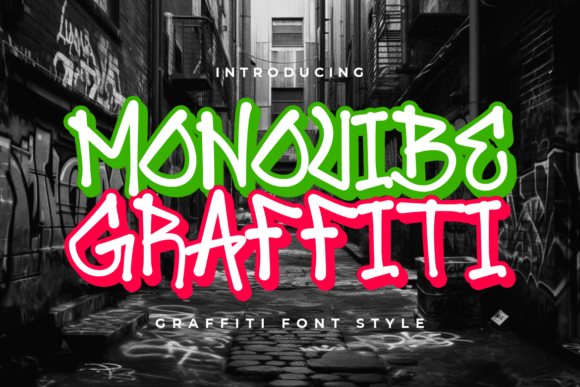
Monovibe Graffiti isn’t just a collection of letters; it’s a visual attitude. Its core design philosophy is built on a monoline structure—each stroke maintains a consistent width, mimicking the steady flow of a spray can or a thick marker. This creates a cohesive, rhythmic look across all characters, from uppercase to lowercase, numerals, and punctuation. The letterforms are hand-drawn, blending smooth curves with sharp, angular tags, giving each glyph a sense of motion and authenticity. It’s an outline-style font at heart, which means the characters are defined by their edges, much like a graffiti piece waiting to be filled with color.
Visually, this approach makes Monovibe incredibly versatile for layering. Designers can overlay vibrant color fills behind the outlines or apply contrasting drop shadows to make the text pop against complex backgrounds. Imagine a bold title on a gritty, textured poster or a logo that needs to stand out on a dark hoodie. The font’s inherent playful yet daring personality cuts through visual noise, making it a powerful tool for grabbing attention instantly.
Putting Monovibe to Work: Real-World Applications
The true test of any creative font is how it performs in practical, real-world scenarios. Monovibe Graffiti excels in projects that demand energy and a youthful, rebellious spirit. Its versatility across uppercase, lowercase, and numerals gives designers full control for diverse typographic needs.
For Branding and Logo Design: If you’re developing a brand identity for a streetwear label, a skate shop, or an independent music label, Monovibe can form the backbone of your visual language. It instantly communicates a connection to urban culture and authenticity. Use it for your primary logo lockup, then carry the style into packaging design—think bold product names on boxes or hang tags that feel like collectible art.
For Digital and Social Media: In the fast-scrolling world of social media, a YouTube thumbnail or Instagram story needs to make an immediate impact. Monovibe’s bold outlines are perfect for creating high-contrast text overlays that remain readable even at smaller sizes. It’s equally effective for designing eye-catching sticker packs, memes, or promotional graphics for events like hip-hop shows or underground art exhibitions.
For Print and Editorial Layouts: Don’t limit this typeface to digital screens. It brings a dynamic edge to print materials like gig posters, festival flyers, and urban apparel catalogs. In editorial design, it can be used for striking headlines in music magazines or rebellious sections of a lookbook, breaking the monotony of traditional serif and sans serif fonts.
Pairing and Practicality: Making It Work for Your Project
While Monovibe Graffiti is a standout display font, it’s rarely used alone for body copy. Its strength is in headlines and short bursts of text. The key to a professional presentation is pairing it with a more neutral typeface for longer paragraphs. A clean sans serif font like a geometric or humanist style provides excellent contrast, ensuring your overall design remains readable and balanced. For a different mood, pairing it with a simple handwritten font can create a cohesive, artsy feel without overwhelming the viewer.
Before committing to any font, including Monovibe, always test it within your specific design context. Check the legibility of critical information—like event dates, URLs, or contact details—at the size it will be viewed. Review the full character set to ensure it includes all the glyphs and punctuation you need for your project, whether it’s a simple poster or a complex website header.
Finally, a crucial step for any commercial project: verify the licensing. Monovibe Graffiti is a premium font, and its license will dictate how you can use it—whether for a single client project, unlimited commercial work, or physical merchandise. Understanding this upfront protects your work and your client’s investment.
Ultimately, choosing a typeface like Monovibe Graffiti is about aligning your visual communication with your message. It’s a deliberate choice to inject your project with the pulse of the streets—to make your design vibe with a sense of freedom, creativity, and bold expression. When your goal is to be impossible to ignore, this font provides the raw, authentic tools to make that happen.